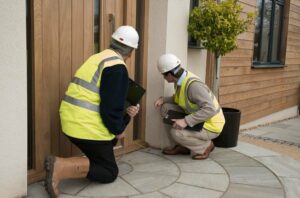
Have you heard about the Neighborhood Land Act? Does it allow you to maintain your property or access the neighborhood?
Well, the act is all about helping people maintain and preserve property. The Access to Neighboring Land Act 1992 gives you the ultimate legal permission to conduct land surveys, neighborhood investigations, and problem identification.
What is the Access to Neighbouring Land Act 1992?
The Neighboring Land Act is a legal framework that permits you to examine neighborhoods with investigative eyes. The act was crafted in 1992, and according to it, you can conduct a detailed survey to determine any potential defects or risks around the property.
Simply put, the act is a legal property law of investigating a property, and the area in its neighborhood, for multiple purposes, like
- New construction procedures
- Identification of building defects
- Cosmetic improvements in building
- Supporting neighborhood evidence for legal matters
- Access rights for shared structures
Connection between ANLA and Building Surveys
The Access to Neighboring Land Act 1992 was created for legal matters, and for this purpose, building surveys are used in their surveying procedures. With the help of this act, they investigate neighborhood properties without any restrictions or boundaries. It gives them lawful access to discover potential risks or defects in the neighborhood that might become a big trouble soon.
However, it is essential to understand the need for ANLA for building surveys. There is a general misconception that surveys are limited only to the interior of the building, but this is not true. Surveys are a type of property, and they also include neighborhoods. ANLA helps build surveys with detailed assessments, where they can find multiple defects, and also acts as supportive evidence in legal or construction matters.
For building surveys, the ANLA act brings the following benefits
Full-fills Access Needs
The best thing about the act is the legal surveying access it provides. It allows you to investigate the neighborhood legally, where you can find the reason behind leaking gutters, timber decay, or external wall damage. Building surveyors need legal access for this, and the ANLA act gives them full survey access to assess the structure lying close to the building.
Facilitates Detailed Inspection
When it comes to building surveys, they are complex, and they demand thorough investigation. For this purpose, you have to detect the exterior defects and the reason behind them. So, for this purpose, a neighborhood survey is an essential part of surveying, and building surveys need access to it. The act facilitates the building surveyors and helps them with in-depth neighborhood inspection. For instance, if there is a water leakage in the exterior wall, the surveyor needs permission to address the issue after investigating the shared walls.
Helps with Legal Disputes
Building surveys are incomplete without boundary measurement and legal dispute handling. Surveyors investigate the length, width, and other boundary measurements to help their clients resolve shared walls or property division legal disputes. For this purpose, the act is of great help. It gives surveyors access to the boundary details and prevents disputes from arising. With the help of this act, surveyors can enter the adjacent walls for legitimate purposes.
Favor Pre-development
Another benefit of the ANLA for building surveys is the pre-construction planning. Surveyors can visit the neighborhood and find out what kind of development is needed or how you can execute it. So, according to this law, the building surveyors can collect construction insights to avoid any damage or development risk. Also, it helps them investigate the future risks of modifying construction plans or infrastructure planning. So, in case of questions like can a neighbor refuse access for maintenance of neighbors property, you can read the act to clear the construction, and other confusions related to building surveys,
Bottom Line
Most people are unaware of the connection between building surveys and access to the Neighboring Land Act 1992. According to this act, building surveyors get legal permission to investigate adjacent and shared walls or the neighborhood environment to use the information for the client’s benefit. The building surveyors can find potential risks or construction defects, use the boundary details to resolve property disputes, and much more.
At Surveying People, the professional and skilled surveyors follow the act, assessing the neighborhood to provide their clients with additional information. If you are dealing with exterior damage, you can call them to find the root cause by thoroughly assessing the neighborhood.
“An experienced group of RICS Chartered Surveyors, here to support your journey whether you are buying, renting or selling your property.”